Explore CoolRock heat-dissipation coatings for metal surfaces, heatsinks and electronic enclosures.
ENGINEERING NOTES
Graphene heat-dissipation coating for heatsinks | CoolRock
Explore coating coverage, thickness and surface preparation for metal heatsinks, deep fins and fanless enclosures.
01
Deep fins and coating coverage
Bring fin spacing, depth and geometry into the coating discussion. Identify surfaces to coat and areas to mask, including mating faces, threads and electrical contacts. Request inspection criteria for coverage and thickness in difficult-to-reach areas.
02
Surface finish is a design variable
Compare the proposed coating with the actual uncoated or anodized baseline. Keep geometry, power, orientation and cooling conditions consistent. Do not assume that replacing a surface finish improves every assembly; validate the selected process on your hardware.
03
From sample to production
Review substrate preparation, coating thickness, curing limits, adhesion and corrosion exposure. Confirm the available grade and process with TiKOUS. Request the applicable safety and environmental documents rather than treating general sustainability statements as compliance evidence.
Application FAQ
Can a surface coating replace thermal paste?
Treat them as separate design decisions. Confirm which surfaces a coating may cover and whether the contact interface still requires a TIM. Validate the complete thermal path.
GRAPHENE COATING
CoolRock
Explore CoolRock heat-dissipation coatings for metal surfaces, heatsinks and electronic enclosures.
Material family
Graphene heat-dissipation coating
Application focus
Metal heatsinks and enclosure surfaces
Design discussion
Substrate, surface preparation, geometry and coating process
Evaluation scope
Your assembly, thermal boundary conditions and comparison baseline
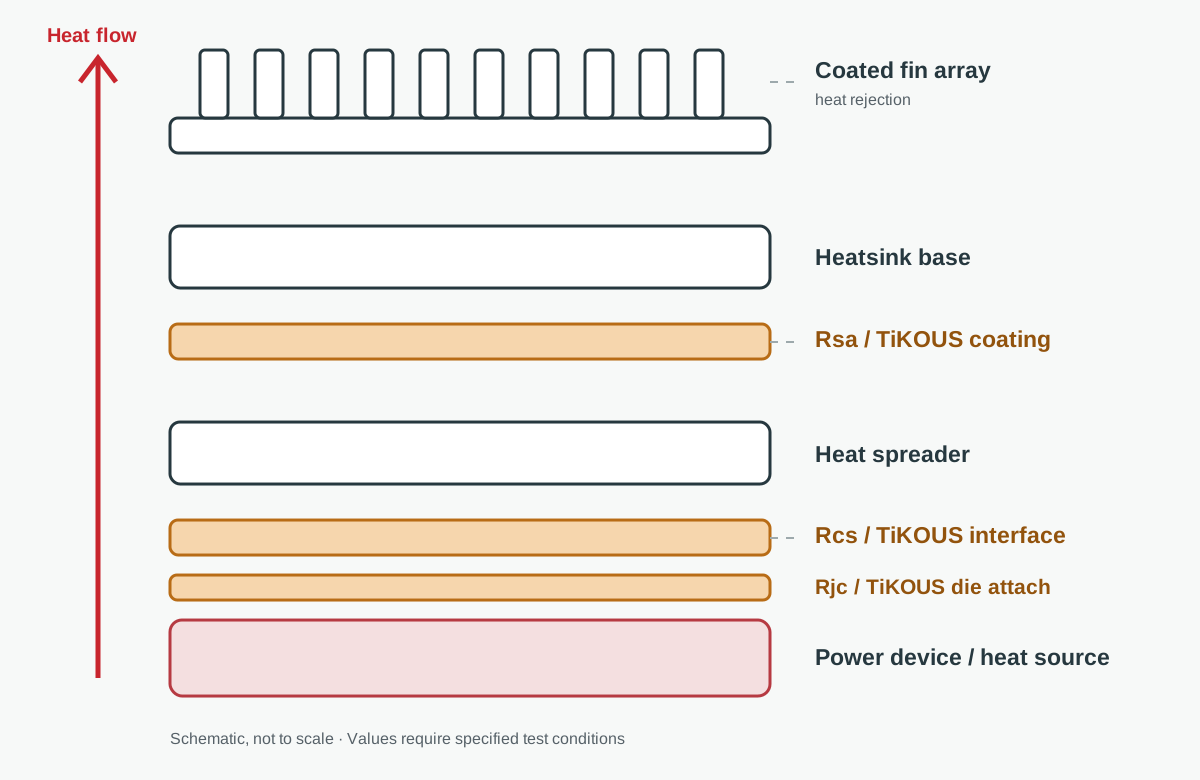
Schematic, not to scale. Values require specified test conditions.
What to consider in your design
Assess compatibility with the metal and surface-finishing process.
Define the relevant heatsink geometry and assembly constraints.
Compare using the same operating conditions and measurement locations.
Material suitability and performance depend on the selected grade, assembly and test conditions. Contact TiKOUS to discuss available specifications and an evaluation for your application.