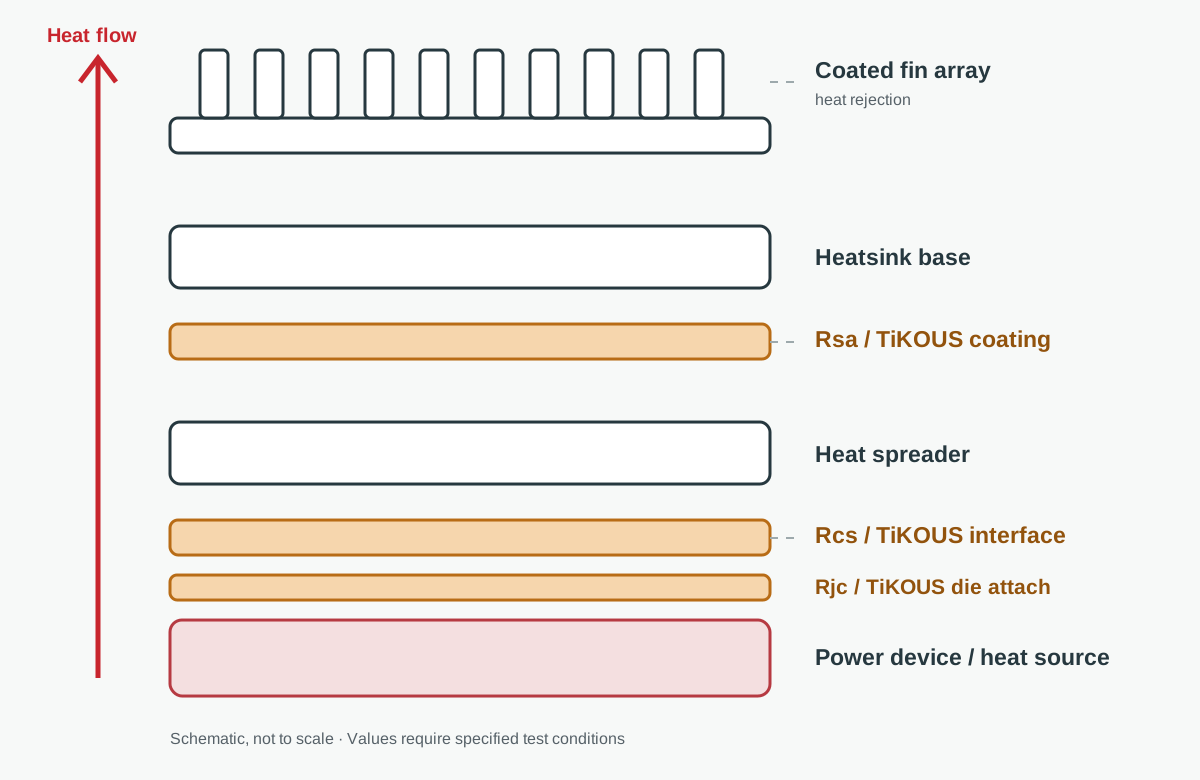
Consider the interface. Complete the thermal design.
Explore KappaX thermal interface materials for the connection between electronic components and thermal-management assemblies.
ENGINEERING NOTES
Graphene thermal interface materials for CPU & GPU | KappaX
Evaluate thermal paste at the interface: bond-line thickness, contact pressure, electrical requirements and reliability under cycling.
01
From package to heatsink
KappaX discussions focus on the mating surfaces between a heat source and its thermal assembly. Provide the contact area, surface flatness, assembly gap and clamping method. Confirm dispensing and rework requirements before choosing a sample.
02
Read the specification in context
The legacy page lists conductivity and thermal impedance values. Request the current grade-specific datasheet with its test method, temperature, pressure and bond-line thickness before using those values in a design. Check electrical insulation and outgassing requirements independently.
03
Reliability over the service cycle
Include thermal cycling, paste displacement, drying and rework in the evaluation plan. Compare initial and aged interface performance using the same assembly. Agree on the acceptance criteria and maintenance interval for your equipment.
Application FAQ
Is a higher conductivity number enough to select a TIM?
No. Compare interface performance at the intended thickness and pressure, then review electrical, processing and aging requirements. Ask for a sample evaluation against your existing material.
THERMAL INTERFACE MATERIALS
KappaX
Explore KappaX thermal interface materials for the connection between electronic components and thermal-management assemblies.
Material family
Thermal interface materials
Application focus
Component-to-heatsink interfaces
Design discussion
Contact surfaces, assembly pressure, interface thickness and process
Evaluation scope
Assembly compatibility and application-specific performance
Schematic, not to scale. Values require specified test conditions.
What to consider in your design
Describe the mating surfaces and how the assembly is installed.
Identify the interface conditions and manufacturing requirements.
Agree on evaluation conditions before comparing materials.
Material suitability and performance depend on the selected grade, assembly and test conditions. Contact TiKOUS to discuss available specifications and an evaluation for your application.